


Advice never hurts the giver.
I used to have that pinned on the wall in my office. It was a reminder that advice is plentiful, but whether you should always take it on board is a question worth asking. I have sought advice in the past, followed it, and realised it was totally wrong. Did that person know that? I don’t know, but I have thoughts.
Why do people give advice? It’s their job. It makes them feel needed and powerful. They were asked and wanted to maintain a relationship. They want to pass on advice they themselves received or gathered and found helpful.
Catch-up service:
In addition to writing & publishing advice, I also post quite a bit about AI, and how it is useful for researchers. There are more coming up, but if you want to stroll through the archive, here are a few suggestions:
NotebookLM has been renamed, but it is still pretty useful, especially when reviewing literature. And it is free.
Since I have written this one, AI-generated infographics have come a long way. They are a really good way to promote your work more widely.
Everyone tells you not to use AI for peer review. But can you use it responsibly?
Gemini is awesome at transcribing handwritten historical documents. (You are welcome, Luca!) It also does a great job on my scrawled comments.
Ambitious now? AI offers us innovative new ways to communicate our research, but nobody is talking about it.
Of course, advice-giving is part of professional role and identity, as supervisor, mentor etc. And once you are senior faculty, you are regularly asked to dispense advice, both formally and informally.
Other people may approach this differently, but when asked to give advice, I start by reflecting on what has been helpful for me over the years. And I have found the advice on how to write the genre of management research papers most helpful, largely because I was trained in a different discipline with genre conventions. Consequently, I got regularly battered by reviewers in my first submission. Nowadays, when I read deeply humanities-shaped writing, I often get annoyed: “What is your point? Stop setting up strawmen only to move on without developing the point! Oh, it was not the point, was is it then? OK, it is this … and … you are going to end it on an open question and only obliquely position yourself through linguistic subtext… right.”
So yes, I have fully transitioned my disciplinary identity by now when it comes to my academic writing and reading identity.
Needless to say, writing advice for and from management journals is plentiful. Some of it is even helpful, at least it has been for me. But I now suspect it was not aways helpful, and when I now pass it on to my doctoral students or teach it in workshops, I am not sure it is always helpful to them either.
Why?
How over what
Approaching the problem as one where a novice researcher-writer has to fit in with genre conventions redirects the focus away from what is actually helpful. Increasingly I have come to believe that it gets in the way of novice writers expressing their actual idea and idiosyncratic perspective. And isn’t this what ultimately adding value through novel perspectives?
Novice researchers need to develop the skills at balancing the many different elements of a paper, and the many different types of knowledge that they are developing. Making connections between these different building blocks is complex, but becomes easier with practice. Distracting them from this process by an obsession with the peculiar genre expectations of management journals — maybe that is not always helpful…
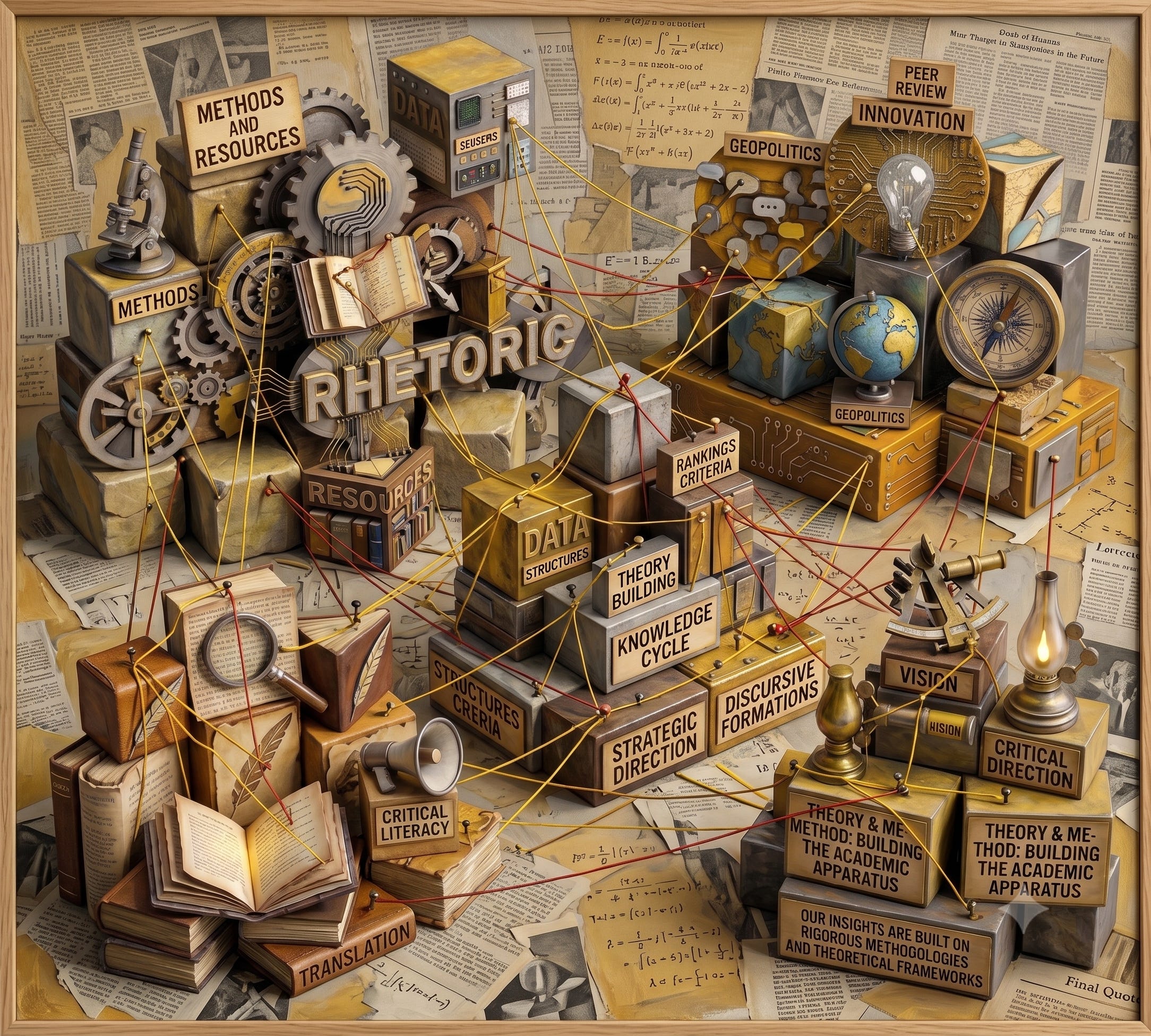
I am not saying teaching genre does not matter. With journals overwhelmed, learning how to write “properly” for these outlets can no longer be the sole job of the reviewers and editors.
But it quickly turns into a toxic cocktail that revolves around the standard recipe for early career researchers, which goes like this:
Write up your thesis as papers
Publish as much and as quickly as possible in top journals
Write for the top journals, follow what other successful researchers have done
Start from the theory
Do whatever the reviewers tell you
Not all of this is wrong; some of it surely is.
I’ve learned to ask people how they feel about the standard strategies. Are they happy to shape their research into papers? Do they feel comfortable sending their first paper to an intimidating top journal or would they prefer something less challenging to gain confidence? I don’t think they need to start from the theory (though it helps if the presentation does, which does not need to follow their process), and you should definitely not do EVERYTHING the reviewers tell you.
But you do need to write to journal, and I give that advice because it is a hygiene factor that every writer has control over. Now, though, I wonder … with all that advice on how to write and structure, does something get lost?
What are we writing about
We focus on getting the theoretical contribution, the structure and the style right – does that mean that management publishing does not care about the substance? What is it we want to say with our research? What are we demonstrating? What lens and approach are we promoting by showing how it offers a better, more novel approach?
In the last month, I started to wonder when working through an article draft with a doctoral researcher. So much was about the different building blocks of a paper – the methods, the theories, the data, the way to set out the problem and question – and what was lost was what she actually wanted to say with her research. Halfway through the revisions, I don’t think she knew anymore. All the well-meant advice had not clarified the message, but maybe buried it further.
It happens to more experienced researchers. After a few rounds of reviews, you did what was asked, and now you cannot remember why you wanted to write that paper in the first place. (Which is why you should never unquestionably do what the reviewers want. You cannot ignore it – but engaging with it should enhance and clarify your thinking, not bury it under the desires of other people.)
Last week I came back to a co-authored paper that I had worked on last year after a rejection, which made us rethink what we wanted it to do. Both co-authors got side-tracked by more urgent things. When I read the draft of that Frankenstein paper, half old, half revised, generally still in that half-baked state, I started to wonder what the damn thing is actually about.
My advice to the doctoral researcher was to work through some of these templates to finding the point in the pointless paper:
Saving the confused paper

Now this might never happen to you. But I certainly have a lot of experience with this. It might be worse if you work across disciplines, epistemic communities, paradigms or whatever you may call them. Because you are probably getting a lot of inconsistent feedback, then become unclear about what the best or most interesting aspect of your paper is, or lose focus on which journal or community best to target with your work.
I loaned, copied and developed these when I needed them, mid-career and perpetually stuck between the demands of two different disciplines. They genuinely helped me figure out what some of my papers were about and what type of journal (business history? management?) they needed to go to.
But this time I decided not to take my own advice.
